
The Gut Lining Repair Approach That Can Help Calm Chronic Bloating
8/9/20262 min read


You can eat well, avoid obvious triggers, and still feel painfully bloated after meals.
After a while, every meal starts feeling like a gamble.
You may even wonder why your gut seems to react when you're doing everything right.
The missing piece may not be another food to remove. It may be how well your gut lining handles what reaches it.
Your intestinal lining works as a selective barrier. It lets nutrients through while helping keep unwanted substances from crossing too easily. When that barrier becomes irritated, digestion can feel less predictable. Bloating can become one of the symptoms you notice most.
Here are the practical pieces that matter most.
Give your gut lining the raw materials it needs.
Your intestinal cells constantly renew themselves. They need adequate protein, vitamins, minerals, and energy to maintain normal structure and function.
That does not mean you need a special "gut healing" food. A varied diet usually matters more than one ingredient.
Aim for regular meals containing protein, colorful plants, healthy fats, and fiber you tolerate well.
Feed your gut bacteria without overwhelming your digestion.
Certain fibers reach the colon largely undigested. Your gut microbes can ferment them and produce short-chain fatty acids.
One of these, butyrate, helps support the cells lining your colon.
But more fiber is not automatically better. If your gut already feels sensitive, suddenly adding large amounts can increase gas and bloating.
Increase fiber gradually. Let your digestion tell you what it can handle.
Stop treating every episode of bloating as proof that one food is bad.
Bloating can come from several factors at once. Meal size, eating speed, constipation, stress, fermentation, and gut sensitivity can all influence how you feel.
That matters because endlessly removing foods can leave you with a smaller diet without addressing the real pattern.
The goal is not to eliminate everything your gut reacts to. It is to understand why it reacts.
Take stress seriously because your gut does.
Your brain and digestive system communicate constantly through the gut-brain axis. Stress can influence gut movement, sensitivity, and how strongly you notice normal digestive sensations.
That means a stressful week can change how the same meal feels.
Slowing down before eating, chewing thoroughly, and giving yourself a calmer meal environment may sound basic. Yet those habits can reduce unnecessary digestive strain.
Remember that the lining is only one piece of the picture.
Supporting the gut barrier can be useful. But chronic bloating can also involve constipation, food intolerances, altered gut motility, bacterial overgrowth, or other digestive conditions.
So the smartest approach does not chase one explanation.
It looks at the whole pattern.
And that is where this gets interesting. Once you understand that the gut lining is constantly responding to food, microbes, stress, and digestion, you can stop looking for one magic trick. You can start asking a much better question: what is keeping my gut irritated in the first place?
That question changes what you do next. Because supporting the lining matters, but it cannot work in isolation. Your daily routine can either give your digestive system the conditions it needs to function normally or keep adding pressure without you realizing it. And once you see those connections, the next piece becomes much easier to understand.
Here's the part nobody tells you.
You can know every food. Every habit. Every supplement. And still wake up tomorrow feeling like your body is quietly working against you.
Not because you're doing it wrong. Because nobody has ever handed you the full picture — just pieces from people selling you the next thing.
That ends today.
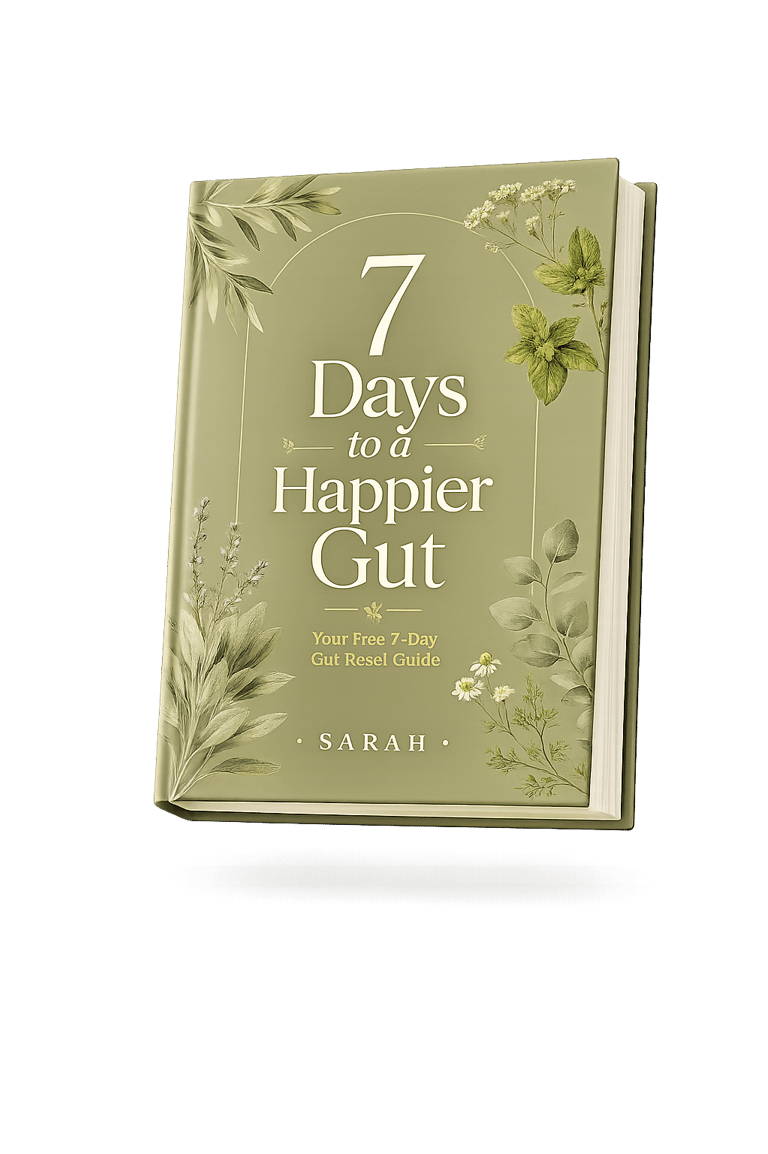
7 Days to a Happier Gut
The free reset guide for people who tried everything and were still bloated, exhausted, and tired of guessing.
No supplements. No overhauling your life. No advice you've already tried. Just seven days — one small shift per day — targeting the actual root of why your gut keeps failing you. Not the symptoms everyone keeps treating.
By Day 7:
✓ You'll understand why your gut has been struggling — and why it was never your fault
✓ The stress-bloating loop no food change alone can fix — broken
✓ Your overnight gut repair window — opened every night, used every morning
✓ A personal maintenance card in your hand — your gut, decoded, in writing
📍 Picture this
Sunday morning. You wake up. You walk to the kitchen. And for the first time in months, you don't check your stomach in the mirror. You don't brace before breakfast. You just exist in your body — light, clear, normal.
That morning is closer than you think.
But it doesn't start Sunday.
It starts tonight — with what you change before bed.
Wait until Monday and you've already lost three days of healing your body wanted to do this week.
Drop your email below. The guide hits your inbox in 60 seconds.
🔒 No spam. No selling your email. One click to unsubscribe — forever.
Simple, honest gut health advice for everyday women. No jargon, no fads — just real tips that actually work, straight to your inbox.
EXPLORE
Stay in the Loop
© 2025. All rights reserved.


Get weekly gut health tips delivered straight to your inbox. Free, always.